Guide · · 5 min read
Furniture Materials and Finishes: A Buyer's Guide to Wood, Foam and Upholstery Fabrics
What the words on a furniture spec sheet actually mean, and which questions help you compare suppliers on materials, finishes and upholstery.
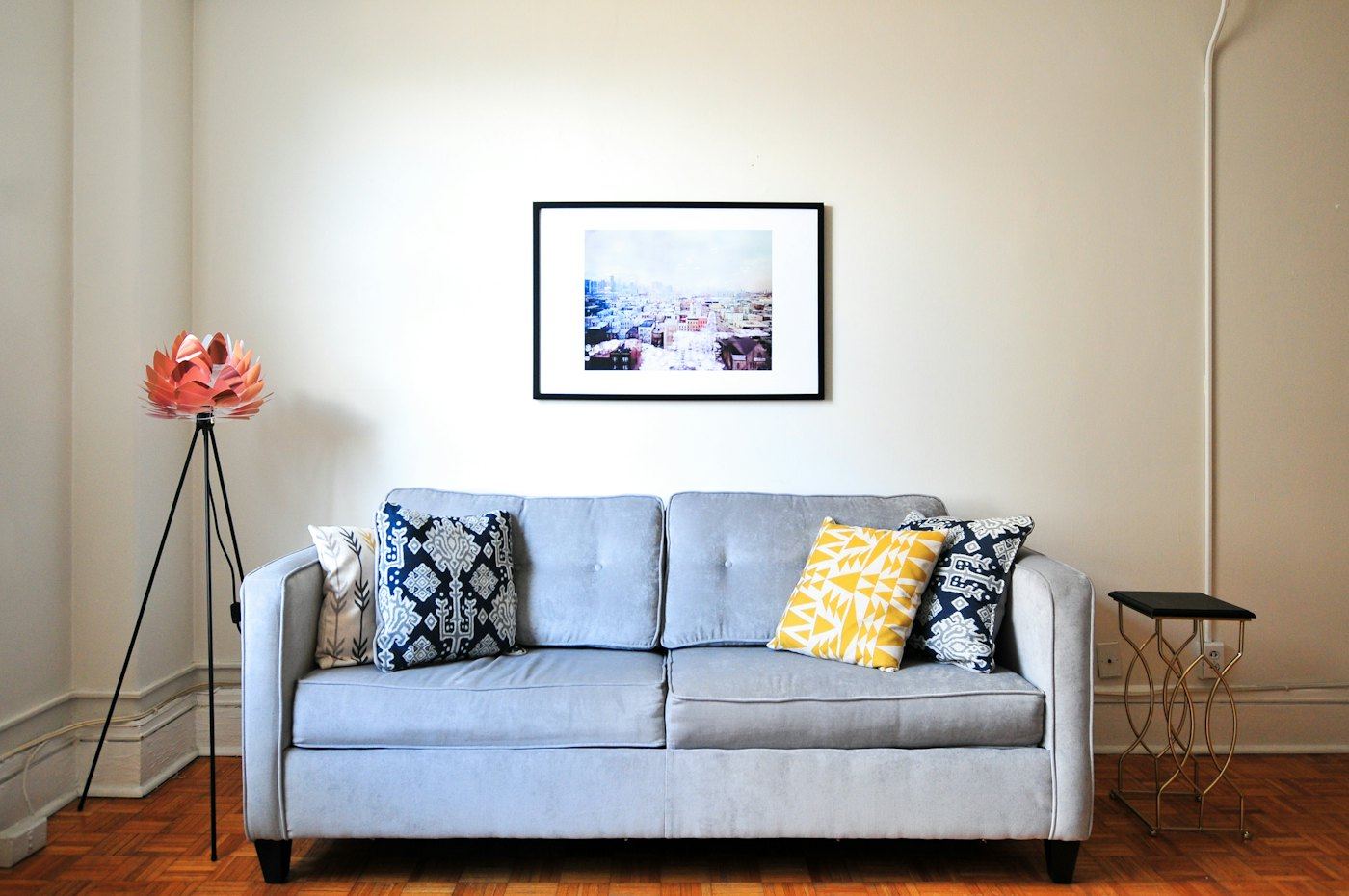
Two sofas can look identical in a catalogue and still behave very differently after a year in a living room. The difference sits under the fabric and behind the lacquer: frame material, springs, foam, fabric construction and surface finish.
This guide explains the materials and finishes you will meet when buying furniture for resale or projects, and what to ask for in a specification sheet so you can compare offers on more than price.
Case goods: solid wood, veneer, MDF and particleboard
Bedroom, dining and office furniture is usually built from a combination of materials rather than one.
- Solid wood (for example beech, oak, walnut) is used for legs, frames and visible parts. It is strong and can be repaired, but it moves with humidity, so design and drying matter.
- Veneer is a thin layer of real wood on a stable panel. It gives the look of walnut or oak on large surfaces with less risk of warping.
- MDF has a smooth, uniform surface that takes lacquer well, which is why lacquered fronts are usually MDF.
- Particleboard is lighter on cost and common for carcasses with melamine or foil faces.
None of these is automatically "cheap" or "premium". What matters is that the material suits the part and that the panel thickness and edge treatment are stated.
Surfaces: melamine, lacquer and edge banding
Melamine faced boards are hard-wearing and easy to clean, with a printed decor. Lacquer is sprayed in several coats and sanded between them; it allows any colour and soft edges. Gloss levels are usually described as matt, semi-matt and high gloss. Matt and semi-matt hide fingerprints and small scratches better; high gloss shows every mark but looks striking in showrooms.
Ask whether lacquer is applied in closed paint booths with controlled drying, since dust and humidity affect the result. For melamine or veneer panels, check the edge banding: its thickness, whether it is machine-applied and how well the joint is sealed. Poor edges are the first place moisture gets in.
Upholstered frames, springs and foam
Frames
Sofa frames are often made of beech or other hardwood in load-bearing parts, combined with plywood. Ask which parts are solid wood and how joints are made; glued and screwed or dowelled joints last longer than staples alone.
Springs
Sinuous (zig-zag) springs run across the seat and give an even, supportive base; they are widely used in sofa sets. Pocket springs are individually wrapped coils that respond point by point and feel softer and more like a mattress. Both work well when matched to the right foam.
Foam and fibre
Foam is described by density (kg/m³) and firmness. Higher density generally means the seat keeps its shape longer. Seat cushions often combine high-density foam with a fibre wrap or fibre-filled top for softness. Back cushions are frequently fibre-filled. Ask for the density of seat foam rather than accepting "high quality foam" as a description.
Upholstery fabrics and leather
| Material | Character | Watch for |
|---|---|---|
| Velvet | Rich colour, soft hand | Pile marking, direction of pile |
| Linen and linen blends | Natural, matt look | Creasing, shrinkage when washed |
| Bouclé | Textured loops, on trend | Snagging with pets |
| Leather | Ages with use, durable | Grade and finish of the hide |
| PU / faux leather | Uniform, lower cost | Peeling over time in heavy use |
Removable, zipped covers make cleaning and later replacement much easier, which is useful both for families and for rental or hotel use.
Abrasion, pilling and colour fastness
The Martindale test (ISO 12947) measures abrasion resistance in rub cycles. Thresholds vary by source and market, but a common orientation is:
- around 10,000–15,000 cycles: light domestic use, such as occasional chairs,
- around 15,000–25,000 cycles: general to heavy domestic use, such as family sofas,
- around 30,000 cycles and above: usually treated as contract grade, with heavy-duty contract specs often asking for 40,000 or more.
In the US, the Wyzenbeek test in "double rubs" is more common, and the two numbers are not directly comparable. Also ask about pilling resistance (small balls forming on the surface, often graded on a 1–5 scale) and colour fastness to light and rubbing, especially for sunny rooms or dark colours on light seats.
What to ask for in a specification sheet
- Frame material and joint method for upholstered items.
- Spring type and seat foam density, plus cushion filling.
- Fabric name, composition, Martindale result, pilling grade and whether covers are removable.
- Panel material and thickness, surface (melamine, veneer, lacquer) and gloss level for case goods.
- Overall dimensions, seat height and depth.
- Any fire-related fabric option if the goods are for contract use.
A spec sheet like this lets you compare two offers line by line and gives your sales team clear answers for customers.
Choosing materials with ARLAS Global Home
Our partner manufacturers work with beech frames, sinuous springs, high-density foam with fibre cushions and removable covers on seating, and walnut, oak and lacquer surfaces on bedroom and dining pieces. Fabric, size and colour can be changed at order stage, and a flame-retardant fabric option is available for contract use. Tell us your market and price segment and request a quote with samples.
Frequently asked questions
What Martindale rating should a family sofa have?
Many buyers look for roughly 20,000 to 25,000 cycles or more for everyday family use. Contract use usually starts around 30,000 cycles.
Is MDF furniture lower quality than solid wood?
Not necessarily. MDF is the preferred base for lacquered surfaces because it is stable and smooth, while solid wood is better for legs and load-bearing parts.
Sinuous springs or pocket springs?
Sinuous springs give a firm, even support and suit most sofa sets; pocket springs feel softer and more responsive. The foam on top matters just as much.
Can I choose my own fabric?
Yes, fabric type and colour can be changed at order stage. Confirm the fabric code in writing before production starts.
By ARLAS Global Home · Updated: